Welcome to Caravan Marketing !
Caravan Marketing Caravan Marketing
  • Home
  • About Us
  • Our Products
    • Shell Industrial Lubricants
    • Kennametal
    • 3M Industrial Tapes, Adhesives & Abrasives
    • QH Metal Working Fluids
    • Dow DuPont & Molykote
  • Shell Lube Analyst
  • Testimonials
  • Blogs
  • Careers
  • Contact Us
Caravan Marketing

admin

19Nov

Why Shell Corena Compressor Oils Are the Top Choice for Industries!
November 19, 2025 admin Shell

In industrial environments, where air compressors work tirelessly under high pressure, Compressor Oils play a critical role in ensuring smooth operation, energy efficiency, and equipment longevity. Whether you are running a rotary screw compressor, a vane compressor, or a reciprocating (piston) compressor, the right oil can make all the difference between optimal performance and unexpected downtime. Among the many available options, Shell Corena Compressor Oils have emerged as a top choice for industries across India, especially for heavy-duty and borewell rig applications.


Understanding the Importance of Compressor Oils

Air compressors are the backbone of various industrial operations—from manufacturing and mining to construction and borewell drilling. These machines work continuously under intense conditions, and without proper lubrication, they are prone to overheating, wear, and energy loss. This is where Compressor Oils step in.

They serve multiple purposes:

  • Lubrication: Reduces metal-to-metal contact between moving parts.
  • Cooling: Helps dissipate the heat generated during compression.
  • Protection: Prevents corrosion and oxidation, extending compressor life.
  • Sealing: Maintains airtight seals, ensuring optimal pressure and efficiency.

Using the wrong oil or delaying oil replacement can result in costly repairs and reduced productivity. Hence, choosing the right product—like Shell Corena Compressor Oils—is essential for uninterrupted performance.

What Makes Shell Corena Compressor Oils Stand Out?

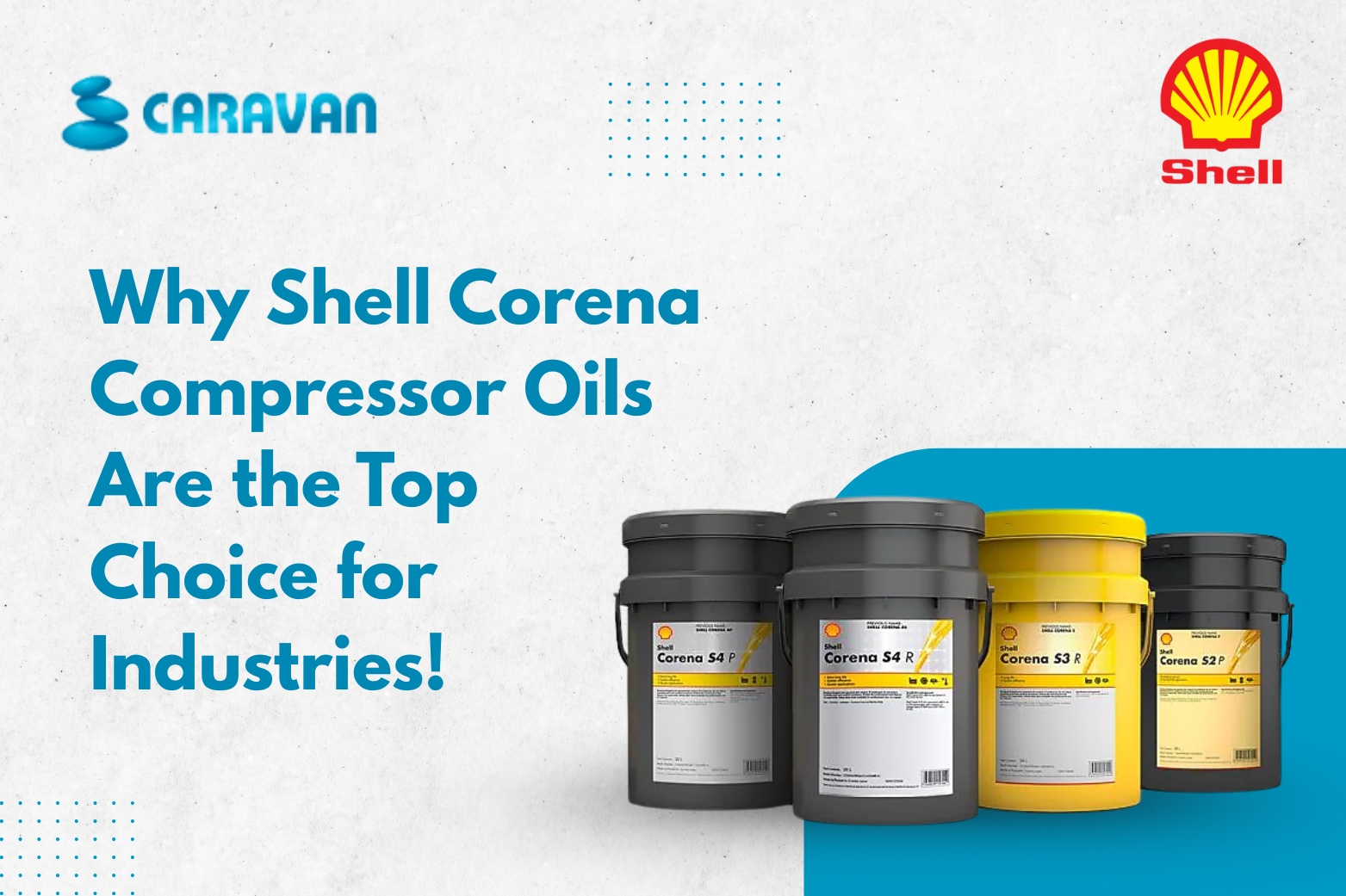
Shell Corena, a globally recognized range of compressor lubricants, has been specifically engineered for both rotary vane and screw air compressors as well as reciprocating (piston) compressors. In India, we only have access to the Corena P, R, and RX range, and these variants are designed to deliver superior protection and performance in demanding industrial environments.


  1. Extended Oil Life
    Shell Corena’s synthetic range offers an impressive Oil Drain Interval (ODI) of 8,000 to 12,000 hours—a significant advantage over standard compressor oils. This means fewer oil changes, reduced downtime, and lower maintenance costs.
  2. Superior Oxidation Stability
    The oils are formulated with advanced additives that resist oxidation and deposit formation. This ensures that the compressor remains clean and performs efficiently over longer periods, even in harsh operating conditions.
  3. Excellent Wear Protection
    Shell Corena protects compressor components such as rotors, bearings, and valves from wear and corrosion. This extends equipment life and helps maintain consistent air output.
  4. Energy Efficiency
    A well-lubricated compressor runs more smoothly and requires less energy to operate. Shell Corena’s high-performance formulation minimizes friction losses, leading to noticeable energy savings.
  5. Versatility for Different Applications
    Whether you operate an industrial plant, a borewell rig, or a workshop, Shell Corena has variants suitable for your specific compressor type and workload. The Corena S, P, and AS series offer tailored solutions based on temperature, pressure, and usage requirements.


Why Industries Prefer Shell Corena in Bangalore?

Bangalore, known as India’s industrial and technology hub, houses numerous manufacturing units, fabrication workshops, and construction projects—all of which rely heavily on air compressors. For these industries, reliability and performance are non-negotiable.

Shell Corena’s long oil life, superior thermal stability, and energy efficiency make it the preferred choice for companies that prioritize equipment longevity and operational cost savings.

Local users have reported consistent performance in both industrial compressors and borewell rigs, proving the oil’s adaptability to diverse operating environments.


Where to Find the Best Compressor Oil Distributors in Bangalore?

Finding genuine products is crucial. The authorized distributor for Shell Industrial Lubricants in Bangalore is Caravan Oil Suppliers, ensuring 100% authentic oils and reliable service.

Authorized distributors not only supply genuine oils but also provide valuable technical advice on choosing the right grade, determining oil change intervals, and ensuring optimal performance.

When selecting a distributor, consider the following:

  • Authorized Partnership: Check if the distributor is officially authorized by Shell or leading lubricant brands.
  • Product Range: A good distributor will stock multiple grades of compressor oils for various industrial needs.
  • After-Sales Support: Technical assistance, timely delivery, and oil analysis services indicate reliability.
  • Customer Reviews: Positive feedback from industrial clients is a strong indicator of credibility.


If you’re based in Bangalore and looking for high-quality compressor oil distributors in Bangalore, you’ll find several reputable suppliers that specialize in Corena P, R and RX range products and other industrial lubricants.


Conclusion: Partner with a Trusted Source for Quality and Performance

In a competitive industrial landscape, using the right Compressor Oils can directly impact your equipment’s performance, operational efficiency, and maintenance costs.

Shell Corena P stands out as a premium solution that combines longevity, protection, and energy efficiency—making it a smart investment for any business that relies on compressors.

For those in Bangalore seeking authentic Shell Corena P products, Caravan Oil Suppliers is a trusted name in the field. They offer a comprehensive range of industrial lubricants and ensure that customers receive genuine, high-performance products backed by excellent service.


FAQs

  1. What is the recommended oil change interval for Shell Corena Compressor Oils?
    Shell Corena synthetic compressor oils can last between 8,000 to 12,000 hours, depending on operating conditions and maintenance practices.
  2. Can Shell Corena be used in all types of compressors?
    Yes. Shell Corena is suitable for rotary screw, rotary vane, and reciprocating (piston) compressors. However, it’s always best to choose the variant recommended for your specific equipment.
  3. Why should I buy from authorized distributors in Bangalore?
    Authorized distributors guarantee genuine products, proper technical support, and the latest formulations that meet Shell’s quality standards.
  4. What happens if I use low-quality compressor oil?
    Using poor-quality oil can cause overheating, carbon deposits, corrosion, and reduced equipment life—leading to higher maintenance costs and downtime.
  5. Where can I find more information about Shell Corena Compressor Oils?
    You can explore Shell’s official page here for detailed product specifications.

Address: 50/ 1, Siddaiah Rd, near Lions Eye Hospital, Doddamavalli, Sudhama Nagar, Bengaluru, Karnataka 560027

Phone: 080 2222 4332

https://share.google/2cGrIaLkLPVUnL3hx

To learn more about the product range and technical details, visit the official Shell Corena Compressor Oils page.
Read more
22Sep

Choosing the right air compressor monitoring system

September 22, 2025 admin Atlas Copco

Compressors are an essential piece of equipment for countless industrial operations. However, they are not fun machines to be around. Your average compressor is loud and emits exhaust heat. That makes compressor rooms the last place you want to be in a factory. And this is precisely why an air compressor monitoring system is so important.
It lets you keep an eye on your compressed air system without being physically present. This has many benefits. First of all, you can monitor the performance of your compressor continuously. Instead of occasionally stopping by in your compressor room to check the readings, the necessary data is always at your fingertips.
But the right air compressor monitoring system does much more.
Instead of merely displaying the information, it will visualise the data in a manner that makes it easier to optimise compressor performance. This increases the efficiency of the compressed air system, reduces carbon emissions and saves money.
Remote monitoring also enhances the compressor’s reliability by identifying potential problems before they occur. This kind of analysis is not something you could do by simply checking on your equipment in a compressor room.
Picking the air compressor monitoring system that is right for you
You can choose between two types of systems with distinct benefits.
First, there is a cloud-based system. At Atlas Copco, it is called SMARTLINK – and it lives up to its name. It allows you to check in on your compressor and its performance from anywhere. All you need is a smartphone or a tablet.
For security reasons, this system only allows you to monitor your equipment remotely, but not to control it.

Smart technology getting smarter
Did you know that one of the benefits of a smart air compressor monitoring system is that it gets more intelligent over time? SMARTLINK, for example, collects millions of data points every hour. And each of them helps make the system more effective for you.
Then there is a monitoring system that uses a local area network (LAN). At Atlas Copco, it is called SMARTVIEW. Connected to a central controller, SMARTVIEW enables the advanced technical visualization of compressor data. This can greatly enhance the efficiency of the compressed air system. At times of high energy prices, this is an especially valuable tool.
It offers the same monitoring options as SMARTLINK and also sends alerts to notify you of potential issues.
Finally, there are also ways to connect your compressor to your facility’s SCADA system. Atlas Copco’s SMART2SCADA software, for example, allows you to share your compressor information with your SCADA system via Modbus TCP, Ethernet IP, OPC UA and Profinet.
The importance of central controllers
So, what are central controllers? For operations with multiple compressors, it is crucial to look beyond operating each machine individually. A central controller does just that. It forms the backbone of an optimised air system by managing multiple compressors.
Depending on your priorities, the central controller can maximize your efficiency or ensure that each individual machine lasts as long as possible.
For example, the Optimiser 4.0 from Atlas Copco will match the air supply to the current demand. This is important because few air systems operate at full load all the time. The Optimiser will also make sure that the machines run at their most efficient operating point/speed and not at full load or minimum load for a long time.
By adjusting the supply, and at the same time keeping the pressure stable, a central controller can save energy and money. In addition, it can also prioritize the use of your most efficient compressors, such as those with variable speed drive technology.
If you are looking to optimise your system’s reliability, a central controller can help as well. The Optimiser can evenly distribute the workload among all compressors and ensure their running hours stay the same.
A central controller also means there is no need for production shutdowns when maintenance is needed. You can simply take one compressor offline and work on it while the others keep your operation going.
Atlas Copco – your air compressor monitoring system specialist
There is one way to ensure that you always know what’s going on in your compressor room. Reach out to Atlas Copco.
We offer remote and LAN-based air compressor monitoring systems. Individually and together, they allow you to check the performance of your equipment at any time and from anywhere.
Our central controllers help you visualise that performance and take the necessary steps to optimise it. In addition, when you get a notification about a potential problem, so can we. A team of experts is working around the clock to make sure a minor issue does not grow into a major headache.
We also offer different service plans. They let you to take your efficiency and reliability to the next level – and head and shoulders above your competition.
This article was extracted from the Atlas Copco website at: https://www.atlascopco.com/en-in/compressors/air-compressor-blog/compressor-monitoring-system

Read more
18Sep

Steps to building a smart compressor room

September 18, 2025 admin Atlas Copco

In our daily lives, we are increasingly relying on smart devices. From phones and watches to cars, refrigerators and home heating systems, technology has made life much easier for us. In an industrial setting, a smart compressor room is doing the same thing and can greatly enhance production processes.
Both at home and at work, these technologies offer many benefits. Some of them are simply convenient. Others save time or energy. Some allow us to control devices remotely. And some, like self-driving cars and machines that talk to each other, seem to come straight out of science fiction movies.
While a smart compressor room offers many advantages, just like in your home, you don’t have to convert all equipment at the same time. There are different technologies and machines that you can install gradually. Each of them will make things easier for you and/or increase the efficiency and reliability of your equipment.
To better understand how you can make your operation smarter, let’s first take a look at the equipment that is out there.

Smart compressors
It all starts with a cutting-edge compressor. Long gone are the days in which compressors exclusively ran at one speed. These fixed-speed models waste a lot of energy if the air demand is low. More modern variable speed drive machines adjust their motor speed to the air requirement and as a result offer double-digit energy savings.
Late generation compressors, however, can do a lot more. For example, a smart temperature control system can regulate the oil injection temperature to make sure the compressor operates with maximum efficiency and reliability.
Or you can take advantage of innovative features that allow your compressor to temporarily exceed its regular capacity.
And there are now even compressors that are OPC UA compatible. OPC UA is an evolving machine language that allows the equipment in a production environment to “talk” to each other. It’s an essential step towards a truly connected production floor.

Smart central controllers
If you are operating multiple compressors, you should take advantage of what intelligent central controllers have to offer.
They will connect and coordinate the performance of all of your machines to ensure you get the most out of them.
For example, a smart central controller will let you distribute the workload across all units or primarily use your newest and most efficient machines. In other words, it will allow you to prioritize efficiency or reliability.

Smart air treatment equipment
Other compressed air equipment, such as dryers or drains, now also come with smart features.
These make them more efficient, reliable and responsive.

Gradually making your compressor room smart
You don’t have to invest in all of these technologies at once. Instead, you can opt to gradually make your compressor room smarter. For example, you can first upgrade the controller to improve the performance of your existing compressors.
Or, if you are using multiple units, you can start by adding one ultra-smart compressor or a multiple compressor control device. Then you can sit back and watch how these improvements will make your life easier and your compressed air system more efficient and reliable.
And when you are convinced that the addition of smart technology will benefit you, you can take the next step.

Getting help setting up your smart compressor room
If you are ready to “get smart” but aren’t sure how to get started, then here is an intelligent first step: Reach out to us. Our compressors and controllers feature all of the technology mentioned above – in some cases exclusively.
And our experts have the required know-how to assist you with transforming your regular compressor room into a smart one.

This article was extracted from the Atlas Copco website at: https://www.atlascopco.com/en-in/compressors/wiki/compressed-air-articles/smart-compressor-room

Read more
06Aug

How Compressor Innovation Can Benefit You

August 6, 2025 admin Atlas Copco

“Compressors have been around for over 200 years, so how can compressor innovation possibly benefit me?”

That’s a fair question to ask. The answer is that there isn’t one way in which an innovative air compression technology can help you. There are many of them.

Innovative solutions can improve your operation’s efficiency, operating costs, environmental impact, and reliability.

That all starts with the compressor itself. Here, incredible improvements have been made over the past three decades. Not long before the turn of the century, compressors all had one speed: Full power. Once you turn them on, they give you all they got.

Seeing how this was inherently inefficient because that much power was not always needed, Atlas Copco came up with an innovation that revolutionized the industry. About 30 years ago, we developed the first compressor whose motor speed was based on the compressed air demand.

That first generation of variable speed drive (VSD) compressors reduced the energy consumption of its users by up to 30%. In a process that takes so much energy, this made a huge difference.

Since then, compressor technology hasn’t stopped evolving and improving.

In the past, most of the innovations – as well as the efficiency and reliability gains – came on the hardware side. Now, however, the compressor software as well as innovative features and services often make the greatest difference.


Compressor innovation everywhere

If you are willing to embrace compressor innovation, then you can take advantage of technologies like:

  • advanced energy-saving algorithms
  • compressors that can “talk” to your other machines and support your connected production
  • controllers that alert you to potential problems and offer fixes
  • remote monitoring so you can always keep an eye on your compressor
  • new features that allow you to get the most out of your equipment
  • a compressor that receives over-the-air-updates and therefore gets better over time

Let’s take a closer look at how these innovations can provide you with a key competitive edge in three main areas.


Innovation and efficiency

Energy expenses will account for the vast majority of all costs associated with your compressor.

And that includes the initial investment, which is only responsible for about 10% of the total cost of ownership. Therefore, many innovations – both on the software and the hardware side – are geared toward saving energy. But other areas that contribute to greater efficiency are often overlooked.

For example, the controller you choose can have a major impact on how much energy you use. This is not only true for individual compressors but also for controllers that optimise the operation of multiple units.

In addition, the right compressed air partner will offer many innovative services that reduce your energy use further.

Atlas Copco is leading the way with many tools that help you figure out which technology is best for you. Furthermore, our experts will offer lots of tips on how you can reduce your operating pressure, which directly affects your energy expenses.

And then there are also technologies that affect compressor efficiency indirectly. For example, leak detection technology can help you eliminate one of the greatest sources of waste.


Innovation and sustainability

Sustainability is going to dictate how we do business in the future. Governments are trying to reach their climate targets by imposing tighter regulations on many industries and/or offering incentives for investments in “greener” technologies.

With innovative solutions, Atlas Copco can help you do your part. That begins with the unprecedented energy savings that our products and services offer and that will help you stay ahead of the competition.


Innovation and reliability

To produce results (and energy savings), your compressed air equipment has to work. Innovative solutions play a major role keeping your compressor running (optimally).

Using remote monitoring and control technologies, compressors can now alert you if there is an issue and even suggest fixes.

The hardware obviously plays an important role as well. Durable components and a design focused on reliability will ensure that your compressor keeps running for a long time.

When you put it all together, you get compressors like those of Atlas Copco’s GA VSDS series. They can reduce your energy consumption by 60% and more compared to traditional compressors. Needless to say, that this will save you a lot of money over time. In addition, you benefit from reliability gains and control options that allow you to monitor and operate your compressor from just about anywhere. So, the real question isn’t how compressor innovation can benefit you. Instead, ask yourself whether you can afford to not work with an innovative compressed air partner.

If you partner with Atlas Copco, you can even have our experts monitor your compressors. Call us now!


This article was extracted from the Atlas Copco website at: https://www.atlascopco.com/en-in/compressors/innovation/benefit-of-air-compressor-innovation

Read more
30Jul

Powering India’s Handicraft Industry with Smarter Compressed Air Solutions

July 30, 2025 admin Atlas Copco

A Real-World Impact of the Atlas Copco GA55 VSD Compressor

The handicraft sector in India spans intricate airbrushed designs, woodwork, and precision tools – all of which rely heavily on compressed air. In this high-demand environment, energy efficiency can be a game-changer.

One prominent Indian handicraft manufacturer recently achieved 25% energy savings and improved operational reliability by upgrading to the Atlas Copco GA55 VSD air compressor.


Why Compressed Air Efficiency Matters

Compressed air powers everything from:

  • Pneumatic carving tools
  • Paint sprayers and airbrushes
  • Dust cleaning systems
  • CNC machines and planers

With sub-sectors like imitation jewellery and embroidered goods contributing thousands of crores to India’s exports, operational efficiency is critical.


The Technology Behind the Change: GA55 VSD

Atlas Copco’s GA55 VSD (Variable Speed Drive) compressor is designed to adapt to fluctuating air demand, helping manufacturers:

  • Save on energy costs
  • Reduce maintenance intervals
  • Lower operational noise
  • Monitor performance in real time with SMARTLINK


Efficiency in Numbers

By moving from three older 37 kW compressors to a single GA55 VSD unit, the manufacturer reported:

  • ₹3 lakh saved in energy annually
  • Reduced downtime
  • Lower noise and outlet temperatures


Proud Partners in Industrial Performance

At Caravan Oil Suppliers, we’re proud to partner with Atlas Copco to bring advanced compressed air solutions to industries across India.

Looking to upgrade your facility’s air systems?

Connect with us to explore Atlas Copco solutions.

Read more
03Jul

The right timing for your air compressor replacement

July 3, 2025 admin Atlas Copco

Volatile energy prices, the expectation to turn a profit, the desire for a future-proof production and increasing environmental regulations. Many business owners face all of these challenges every day. When it comes to compressing air, however, there is a solution: reducing your air compressor energy consumption by switching to a more efficient model.

At first glance, that might seem counterintuitive. How can spending more money be economical? Or how does adding more equipment help the environment? However, replacing an old air compressor model with a new compressor can make a major difference. By lowering your air compressor energy consumption, you can address all of these challenges.

The reason is that compressors are like no other capital goods. Here, the initial investment constitutes a very small slice of their total cost of ownership. Over the air compressor’s lifetime, you will spend the bulk (80%) of your money on energy.

That is why replacing an older, inefficient machine with a new one will pay off rapidly. This is especially the case during times of high energy prices or looming supply bottlenecks.


Do you want to know if it’s time to replace your compressor? Have a look at the checklist and find out!

Let’s say that you spend Rs 50,00,000 over the lifetime of a standard compressor. Of that, only Rs 5,00,000 of that total will go toward purchasing the machine. Another 5,00,000 is spent on maintaining it, and the rest is taken up by the air compressor energy consumption.

It’s easy to see where your greatest savings potential is in that scenario.

However, if you increase the initial investment and purchase a highly efficient compressor, you can realise massive energy savings and make your operation less vulnerable to fluctuating and high energy prices.

New businesses or companies that expand their production face a relatively easy decision when they have to buy a compressor. There will be future-proof, energy-efficient and reliable models out there that meets their needs.

Things get trickier when the question is whether to replace an existing compressor. After all, the purchase of a new model constitutes a significant investment. However, some upgrades offer so many economic benefits that not making the switch is a lot more expensive.


So, how do you know when an upgrade not only benefits your operation but also your bottom line? Here are some things to consider:


  1. How old is the existing compressor and what type is it?
    On average, Atlas Copco improves the energy efficiency of its compressors by 1% annually. That does not seem like a lot.But, if you take into account that energy costs make up the largest share of a compressor’s total cost of ownership, the savings realised by a new model will quickly add up. This is also true with regards to the inefficiency of older compressors.

    In addition, if the current compressor is a fixed-speed model, then the switch to a variable speed drive (VSD) compressor could result in much greater energy savings of up to 50% right away.

  2. Does your compressed air network have a central controller?
    If a compressed air network consists of multiple compressors, then a central controller can select the most efficient compressor or a compressor combination.But while a central controller will optimise compressed air system performance, it will not make older compressors inherently more efficient.

    On the other hand, when a new compressor is added to the “fleet”, the central controller will help maximise its efficiency to benefit the entire system.

  3. Is there a remote monitoring system?
    A remote monitoring system allows the operator to optimise the compressed air network from just about anywhere. In this case, a cutting-edge compressor may offer additional connectivity advantages over an older model. As a rule of thumb, the more advanced a compressor is, the more beneficial a state-of-the-art controller and remote monitoring system will be.

    For example, these features will not be very useful in the case of a small piston compressor used for occasional tire inflation. A VSD compressor, however, will achieve additional savings when its operation can be monitored and adjusted from afar at any time.

  4. Did you check applicable regulations?
    Governments around the globe are increasingly tightening emission standards and other environmental regulations. Older compressors may soon no longer be in compliance with existing rules. This is also true in India and especially in Karnataka, which is a leader in renewable energy.

    So, it would be beneficial to go with especially energy-efficient models when purchasing a new compressor. That way, you will ensure that you meet the country’s environmental standards for years to come.

  5. Are there any financial incentives?
    In order to meet climate goals, the government is offering a lot of financial incentives to companies to go green.

    If you are considering whether to replace an existing compressor with a more efficient one, check whether any subsidies are available for going green.

  6. Did you make sure that the existing network has been checked for inefficiencies?
    There are many compelling reasons to buy a new state-of-the-art compressor. Before making that investment, you should make sure that any inefficiencies in your compressed air system were not simply the result of fixable problems.

    One way to do this is to commission an energy audit as that will give you a very good idea where your inefficiencies can be found.

    Even if you do not want to spend the money on such an audit, there are things a compressed air expert can do. For example, checking the network for costly leaks.

    Please contact us for such an audit.

  7. Is there an optimised compressor room?
    A compressor room is more than the space that houses your compressor. It also determines your compressor performance and can help increase the efficiency of your compressed air network.

    For example, it is important to ensure that the intake air is as clean as possible. Compressors generate a lot of waste heat. Therefore, you should ensure that the compressor room is well-ventilated or, even better, install an energy recovery system.

  8. Do you have an energy recovery system?
    An energy recovery system is very useful in converting waste heat generated when compressing air into reusable energy.

    Thus, if you do not have one yet, you should consider installing one in your system and even more importantly, ensuring that it is compatible with your new compressor.

    Answering these questions will not only help you optimise your existing equipment, it will also tell you whether it is time for an upgrade. And, if you need additional information, please contact us.


This article is extracted from the Atlas Copco website with many key changes. The original article can be found here at: https://www.atlascopco.com/en-us/compressors/greenproduction/compressor-replacement

Read more
02Jul

How to Improve and Maintain the Air Quality of Your Compressed Air System

July 2, 2025 admin Atlas Copco

According to the Compressed Air and Gas Institute, poorly maintained air compressor systems are responsible for some $3.2 billion in excess utility costs and inefficiencies. Maintaining the air quality of your compressed air system can save your time and money. But before you install new filters and aftercoolers, it’s important to understand the specific needs of your air compressor.

Common issues with compressed air systems

Solids, liquids and gas vapours can all affect the smooth and efficient running of your air compressor system, with particularly common issues caused by particulates, moisture buildup and lubrication contamination.


Particulates

Dust and other small solid materials are present in the air.

While this might not affect the general environment a great deal, it can cause inefficiencies in your air compression systems and lead to inadequate performance.

It’s also not easy to actually see particulates. The human eye can only see particles about 40 microns thick or higher. To put that into perspective, a single strand of human hair is somewhere between 50-70 microns thick, while particulates that can affect the quality of air in your compressor can be as small as 3 microns.

Even particulates 1/10th of a micron in size can have adverse effects on your compression system. Risk of particulate contamination within an air compression system is increased depending on the location and reasons for usage.

For example, a woodworking workshop or carpentry store produces plenty of sawdust, with smaller particulates posing a threat to the compression system. Particulates will mostly damage end points on an air compression system.

Compressors with a high volume of particulates will also require more lubrication, which is not only costly, but can lead to over-lubrication of the compressor system.


Moisture buildup

Humidity within a compressed air system can damage pipes and ruin the efficiency of your system. The hot air produced by the compressor holds a high amount of moisture.

When this air moves through the compressor and gets cooled, the moisture condenses and builds up.

This can lead to rust on the piping which will damage your system and eventually lead to failure. Even without the rust, moisture affects the efficiency of your air compressor system, making it more expensive to run.


Over or under lubrication

Some compressed air systems require lubrication to function correctly.

Failure to correctly lubricate by applying too much (or too little) lubrication can damage your system.

Use of low-quality lubricant can also gum up the compression system and reduce the efficiency of your compressor.

Lubricant contamination is a serious concern for air compressors used in food production and food sciences, as well as other chemical based industries where purity of chemical process is paramount.


Compressor contamination can affect all compressors

While higher end air compressors boast more power and features than more economical units, all types of air compressors are at risk of material damage and poor air quality from particulates, moisture buildup and lubrication contamination.

Without proper care and maintenance, even best in class air compressors are at risk of damage without proper maintenance.


Tips for understanding your air quality needs

So, how exactly do you improve air quality for your air compressor system? The first rule is to determine the level of air quality you actually need for your air compressor, as overspending on filters and drying equipment can run up excess costs and reduce your efficiency where they aren’t needed.

There are a couple of ways to determine the air efficiency you need for your air compressor system.


Four levels method

The US Department of Energy breaks air quality requirements into four quality levels:

  1. Plant Air: Used for equipment and tools in industrial manufacturing.
  2. Instrument Air: Any usage relating to climate control, laboratory work, spray painting and powder coating.
  3. Process Air: Air used for food and pharmaceuticals, as well as electronics.
  4. Breathing Air: This air quality is used for respirators, dive tank refills, hospital air etc.

In this model, 4 is the highest level of air quality requirements.


ISO quality classes

Air filters and other equipment can also be defined by this handy table, with 0 representing the highest quality standard. The table breaks up ratings of particulates and other contaminants into solids, liquids and gas (vapour), and is ideal for matching specific filters to your specific needs.

Specific equipment

It’s essential to define both the intended uses for your air compressor and the level to which you require filtration, that way you can make the best use of available equipment.


Filters

Air compression maintenance can get tricky when it comes to filters. For example, a class 2 dirt filter will supply your compressor with air quality at that level for dirt only. So, if you’re concerned about liquids or gases, it might not be the best fit for your system.


Aftercoolers

Aftercoolers prevent moisture buildup in the end points beyond the compressor by cooling the air before it reaches the end point. Once the air is cooled, water is removed, keeping compressed air close to ambient temperature. Aftercoolers come in two basic models.

  • Air cooled: Simpler system using only air extract the moisture.
  • Water cooled: More efficient provided there is a reliable water source.

Some compressors come with aftercoolers as standard.


Dryers

Dryers tackle the same problem as aftercoolers (moisture buildup) but from a different approach. Rather than cooling the compressed air before it reaches end points, dryers lower the dew point so that moisture build up isn’t possible. Dryers can be expensive, so be sure that it’s necessary for your compressor needs, and the right size for your system.


A clean system is a quality system

There’s no doubt that regular maintenance of your air compressor system will keep it running smoothly and more efficiently. But the most important takeaway for improving your compressor’s air filter is to both understand the needs of your compression system and the right equipment to meet those needs. That way, you can have a high-quality air compressor system that is cost efficient and easy to maintain.

This article is extracted from the Atlas Copco website at: https://www.atlascopco.com/en-us/compressors/air-compressor-blog/how-to-improve-and-maintain-your-compressed-air-system-air-quality

Read more
30Jun

Simple Tips for Maintaining Your Compressed Air System

June 30, 2025 admin Atlas Copco

Maintaining your compressed air system is essential for extending its lifespan and ensuring consistent performance. Here are a few simple tips to keep your air compression system running smoothly:

• Check for Leaks: Air leaks can be a major source of energy loss in your compressed air system. Regularly inspect fittings, pipes, and connections to identify and fix leaks, ensuring maximum efficiency.
• Change Filters Regularly: Filters prevent contaminants from damaging your system, but they can get clogged over time. Replace filters as recommended to maintain optimal air quality and system performance.
• Monitor the Air Dryer: Moisture can cause serious issues in your compressed air system, so regularly check and maintain your air dryer. Make sure it’s functioning properly to keep your system dry and free from corrosion.
• Inspect the Compressor: The air compressor is the heart of the system, so it’s important to regularly inspect and service it. Keep an eye on oil levels (if applicable), check for unusual noises, and ensure it’s operating within the recommended parameters.
• Check System Pressure: Operating your system at higher pressure than required can waste energy and strain your equipment. Regularly monitor the system pressure to ensure it’s set at the optimal level for your specific application.

By following these simple tips, you can ensure that your compressed air system remains efficient, reliable, and cost-effective.
Learn more on How to improve and maintain the air quality of your compressed air system.
This article was extracted from the Atlas Copco website at: https://www.atlascopco.com/en-in/compressors/wiki/compressed-air-articles/what-is-compressed-air

Read more
26Jun

Cost Saving Opportunities for Compressors

June 26, 2025 admin Atlas Copco

In the world of compressors, there are often significant and unutilised energy-saving possibilities including energy recovery, pressure reduction, leakage reduction and optimisation of operations through correct choice of a control and regulation system as well as the choice of compressor size.

We are going to take a look at some of the opportunities for minimizing the compressor’s operating costs.

The power requirement concept
When making calculations, it is important to apply the overall power requirement concept. All energy consumers that belong to a compressor installation should be accounted for: for example, inlet filters, fans and pumps, dryers and separators. For comparisons between different investment alternatives, the use of comparable values is particularly important. Therefore, the values must be stated in accordance with internationally recognized standards and regulations, for example, as per ISO 1217 Ed.4 -2009.


The working pressure
The working pressure directly affects the power requirement. Higher pressure signifies higher energy consumption: on average 8% more power for 1 bar higher pressure.

Increasing the working pressure to compensate for a pressure drop always results in impaired operating economy. Despite this adverse economic effect, increasing compressor pressure is a commonly-used method for overcoming pressure drops caused by an under dimensioned pipe system or clogged filters.

In an installation fitted with several filters, especially if they have been operational for a long period of time without being replaced, the pressure drop can be significantly higher and therefore very costly if unattended for long periods of time.

In many installations, it is not possible to implement large pressure reductions, but the use of modern regulation equipment allows the pressure to be realistically lowered by 0.5 bar. This represents a power savings of a few percent. This may seem to be insignificant, but considering that the total efficiency of the installation is increased by an equivalent degree, the value of this pressure reduction in terms of actual savings is more readily obvious.

Optimising air consumption
A more balanced load on the compressed air system can be obtained by analysing routines and the use of compressed air. Through this, air flow production can be decreased, reducing operating costs.

Unprofitable consumption, which usually is a consequence of leakage, worn equipment, processes that have not been properly configured or the incorrect use of compressed air, is best rectified by increasing general awareness.

Dividing the compressed air system into sections that can be separated using shut-off valves can serve to reduce consumption during the night and over weekends.

In most installations, there is some degree of leakage, which represents a pure loss and must therefore be minimised.

Frequent leakage can amount to 10-15% of the produced compressed air flow. Leakage is also proportional to the working pressure, which is why one method of reducing leakage is to repair leaking equipment, and thereby lowering the working pressure, for example, at night.

Lowering the pressure by only 0.3 bar reduces leakage by 4%. If the leakage in an installation of 100 m3/min is 12% and the pressure is reduced by 0.3 bar, this represents a saving of approximately 3 kW.


Regulation method
Using a modern master control system, the compressor central plant can be run optimally for different operating situations while enhancing safety and availability. Selecting the right regulation method encourages energy savings through lower system pressure and a better degree of utilisation, which is optimised for each machine in the installation.

This can help reduce unplanned downtime by ensuring availability is increased.

Also, central control allows programming for automatic pressure reduction in the entire system during operation at night and on weekends. As compressed air consumption is seldom constant, the compressor installation should have a flexible design, using a combination of compressors with different capacities and speed-controlled motors. Compressors may run with speed control and screw compressors are particularly suited for this, as their flow rate and their power consumption are virtually proportional to their speed.

How does energy recovery work in compressors?
When using electricity, gas or oil for any form of heating within the production facilities or in the process, the possibility of fully or partly replacing this energy with recovered waste energy from the compressor installation should be investigated.

The decisive factors are the energy cost in Rs/kWh, the degree of utilisation and the amount of additional investment necessary.

A well-planned investment in waste energy recovery often gives a payback time of only 1–3 years. Over 90% of the power supplied to the compressor can be recovered in the form of highly valuable heat.

The temperature level of the recovered energy determines the possible application areas and, therefore, its value. The highest degree of efficiency is generally obtained from water-cooled installations, when the compressor installation’s hot cooling water outlet can be connected directly to a continuous heating demand, for example the existing heating boiler’s return circuit. Recovered waste energy can then be effectively utilised year-round. Different compressor designs have different prerequisites.

In some situations, it may be possible to look at the possibilities of selling the recovered energy in the form of heat or cooling or electricity, etc.
Together with electricity, water and gas, compressed air keeps our world running. We may not always see it, but compressed air is all around us. Because there are so many different uses for (and demands of) compressed air, compressors now come in all kinds of different types and sizes. Contact us to find the best compressor for your needs!

This article is extracted from the Atlas Copco Website at: https://www.atlascopco.com/en-us/compressors/wiki/compressed-air-articles/cost-saving-opportunities

Read more
24Jun

Energy Recovery in Compressor Systems

June 24, 2025 admin Atlas Copco

Many installations that produce compressed air offer significant and frequently unutilised energy saving possibilities in the form of waste energy recovery. In large industries, energy costs can amount to 80% of the total cost of compressed air production. However, a lot of this energy can be recovered, which in turn will save you a lot of money.


What is waste energy recovery in compressor installations?
When air is compressed, heat is formed. Before the compressed air is distributed into the pipe system the heat energy is extracted, and becomes waste heat. For each compressed air installation, the issue of sufficient and reliable cooling capacity for the installation must be addressed. Cooling can take place either by means of the outdoor air or a cooling water system that uses municipal water, stream water or process water in an open or closed system.

A compressor central plant in a large industry that consumes 500 kW over 8,000 operating hours per year represents a yearly energy consumption of 40 lakh kWh which at approximately 8 Rs/kWh translates to 3.2 Crores. The possibilities for recovering substantial amounts of waste heat via hot air or hot water are real. As much as 94% of the energy supplied to the compressor can be recovered, for example, as 90°C hot water from oil-free screw compressors. This equals to roughly 2.95 Crores recovered in energy costs.

This fact illustrates that saving measures quickly provide substantial return. The return on investment for energy recovery is usually as short as 1–3 years. In addition, energy recovered by means of a closed cooling system enhances compressor operating conditions, reliability and service life due to an equalised temperature level and high cooling water quality, to name but a few advantages.

Nordic countries are somewhat of a forerunner in this arena and energy recovery has been standard practice for quite some time now for compressor installations. Most medium to large compressors from the major suppliers over there are now adapted for fitting with standard equipment for waste heat recovery. This is being adopted in India now by companies such as TVS Motors, Tenneco and Gabriel India


How do we calculate the recovery potential?

The laws of physics dictate that nearly all energy supplied to a compressor installation is converted into heat. The more energy that can be recovered and utilised in other processes, the higher the system’s overall efficiency.


To calculate the amount of recovered energy, we will use the following formulae.
1. Recovered energy formula:

W = Recovered energy (in kWh/year)
K1 = Portion of time with loaded compressor (hrs/year)
Q1 = Available coolant power with loaded compressor (kW)
K2 = Portion of time with off-loaded compressor (hrs/year)
Q2 = Available coolant power with off-loaded compressor (kW)
TR = Total time of recovered energy demand (hrs/year)
Once we calculate the amount of recovered energy (W), we can use the Savings formula.


2. Savings Formula:

Where:
• W = recovered energy (from the main formula)
• ep = energy price (Rs/kWh)
• η = efficiency of the heat source (e.g., 90% = 0.9)

Example:
Say:
• W = 1,00,000 kWh/year (recovered)
• Ep = 8 Rs/kWh
• η = 0.85 (i.e., 85% efficiency)

In many cases the degree of heat recovery can exceed 90% if the energy gained by cooling the compressor installation can be utilised efficiently. The function of the cooling system, the distance to the point of consumption, and the degree and continuity of the heat requirement are all decisive factors. With large thermal flows, selling the recovered heat energy is a possibility that should not be ignored. The electrical energy supplier could be a potential customer, and investment, sub-order and delivery could readily be negotiated. An opportunity for savings also exists by coordinating energy recovery from several processes.


Get in contact with us to see how we can help you save energy today!


This article was sourced from the Atlas Copco website with several key changes. The original article can be found at: https://www.atlascopco.com/en-us/compressors/wiki/compressed-air-articles/energy-recovery

Read more
    123…7

Caravan Oil Suppliers is a 40+ year old company managed by a team of professionals in the Industrial Consumables business based in Bangalore with branches in Hosur and Hubli. We are distributors of Shell Industrial Lubricants, DowSil Silicone Sealants, 3M Tapes, Adhesives & Abrasives, Quaker Houghton MetalWorking Fluids, WIDIA Cutting Tools, and Molykote speciality lubricants.

USEFUL LINKS

Home

About Us

Our Products

Testimonials

Contact Us

CONTACT US

Plot No. 106, Road No. 4, Jigani
Industrial Area, 2nd Phase,
Bengaluru – 562106

9980005255, 080 – 42297210

[email protected]

© Copyright 2020 Caravan Marketing, Developed by Shloka Concepts